
 381 60 30 65 800



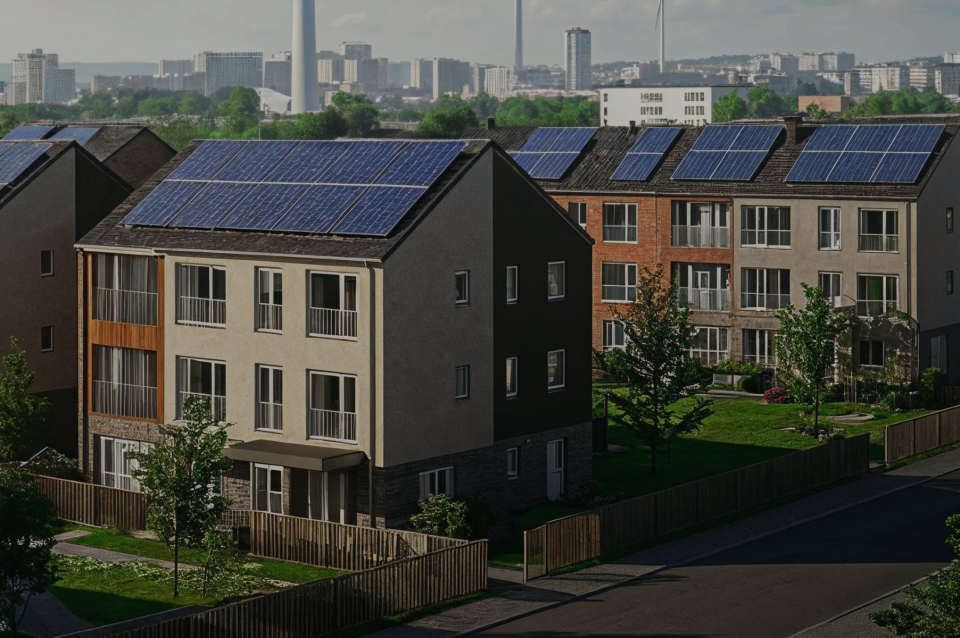
When discussing the development of renewable energy, the conversation usually revolves around megawatts, investments, and large-scale power plants. Much less attention is paid to citizens who want to generate electricity on their own rooftops, residents who wish to install a shared solar system on their apartment building, or local communities seeking to develop their own energy projects.
Yet this is one of the key questions that the upcoming amendments to Serbia's Law on the Use of Renewable Energy Sources must address: will citizens finally be given genuine opportunities to become active participants in the energy system, or will their role remain limited to paying electricity bills while their legal rights exist only on paper?
The Belgrade Open School, the Centre for Environment Improvement, and the Platform for Social Development and Innovation have submitted a set of comments to the Ministry of Mining and Energy on the Concept Paper accompanying the amendments to the Law. A significant part of these proposals focuses on renewables self-consumers, apartment buildings, and renewable energy communities.
The underlying principle is straightforward: citizens' rights to generate, consume, store, sell, and share renewable energy must be clearly regulated and practically enforceable.
The amendments to the Law on the Use of Renewable Energy Sources are being prepared to improve the existing legal framework and align it with the relevant provisions of the EU Renewable Energy Directives (RED II and RED III).
Citizens must be at the heart of the Law
The Background Paper acknowledges the importance of active participation by citizens, local communities, and businesses in the energy transition. It refers to renewables self-consumers, collective self-consumption in apartment buildings, renewable energy communities, and new financing models.
This is a positive starting point, but it is not enough.
We proposed that one of the explicit objectives of the Law should be the establishment of a functional legal, institutional, administrative, technical, and financial framework enabling the active participation of final customers in the electricity system.
This may appear to be a technical addition, but it is far more significant than it seems. The objectives of a law shape how its provisions are interpreted, how secondary legislation is developed, and ultimately how the law is implemented in practice. Unless citizens' active role is explicitly recognised, there is a real risk that future regulations will continue to favour the traditional, centralised energy system or focus primarily on large-scale solar and wind projects.
European legislation recognises citizens as active consumers who can generate electricity, use it for their own needs, store it, sell surplus electricity, and cooperate with others. Serbian legislation should clearly establish that creating the conditions for such participation is one of its core objectives.
Renewables Self-Consumers
Existing Net Metering Rights Must Be Protected
Households invested in rooftop solar systems based on the legislation in force, publicly available information, expected savings, and projected payback periods. Net metering was one of the central assumptions behind those investment decisions.
While the Energy Law establishes that new renewables self-consumers may qualify for net metering until 31 December 2026, it does not specify how long households that have already acquired this right will be allowed to retain it.
We therefore proposed that the Law explicitly guarantee that households may continue using net metering for as long as they operate the generation facility for which grid connection was approved and on the basis of which they obtained renewable self-consumer status.
Such a provision would ensure continuity of the existing settlement scheme while also providing an important guarantee of legal certainty.
The state should not encourage citizens to invest their own money under one set of rules only to leave those rules uncertain or change them later in ways that undermine the economic viability of their investment.
Protecting existing renewables self-consumers is equally important for future investments. Citizens will only invest in the energy transition if they can trust that the rules governing their investments will remain stable.
Renewables self-consumers should have broader rights
The current renewables self-consumer model largely assumes that households generate electricity primarily for their own consumption while feeding surplus electricity into the grid through their electricity supplier.
The European framework provides much broader opportunities.
Renewables self-consumers should be able, either independently or through aggregators, to generate and store electricity, while also selling surplus electricity under different contractual arrangements. These could include sales to suppliers, Renewable Power Purchase Agreements (PPAs), or peer-to-peer electricity trading.
This does not mean that all these models can or should be introduced immediately. Their implementation requires amendments to several laws, not only the Law on the Use of Renewable Energy Sources. Nevertheless, these rights should already be recognised in the Law. Otherwise, renewables self-consumers will remain locked into a single model of managing surplus electricity even as technology, markets, and business models continue to evolve.
This would also significantly support the development of renewable energy communities, where renewables self-consumers could sell surplus electricity at prices above standard market rates, while community members could purchase electricity at lower prices than those typically offered by conventional suppliers.
Greater citizen participation also requires a more active and flexible electricity market. Renewables self-consumers should not remain passive consumers who are merely allowed to occasionally export surplus electricity exclusively to their supplier.
Multi-apartment buildings
Residents of apartment buildings should not be disadvantaged by the distribution system operator's inaction
Citizens living in detached homes can install rooftop solar panels and consume the electricity they generate directly at the moment of production. Since both generation and consumption take place behind the meter, this electricity is not considered electricity drawn from the distribution grid. As a result, it is effectively valued at zero and does not appear on the electricity bill.
The situation is considerably less favourable for residents of apartment buildings.
Although the current legislation recognises the possibility for a housing' association to become a renewables self-consumer, the existing model does not recognise the simultaneous direct consumption of electricity generated by a shared rooftop solar installation and used by residents at the same time.
Instead, all electricity generated is treated as surplus electricity injected into the distribution system. Consequently, it is subject to distribution network charges, excise duty, and VAT.
As a result, residents of apartment buildings are placed at a disadvantage compared to households living in detached homes, even though both are consuming solar electricity generated on the building in which they live.
We therefore proposed that the Law explicitly establish the principle that electricity generated by a homeowners' association's solar installation and simultaneously consumed by its members should be treated as direct self-consumption by the homeowners' association acting as a renewables self-consumer.
We also proposed that, if the Distribution System Operator (Elektrodistribucija Srbije) fails to provide the necessary metering infrastructure, the difference between electricity delivered to and withdrawn from the grid should be deemed to be zero for each settlement period.
The detailed rules governing metering, allocation, and settlement can be regulated through secondary legislation. However, the underlying right should be firmly established in the Law itself to ensure that future technical regulations cannot undermine its purpose.
Without such a solution, rooftop solar installations on apartment buildings will remain economically unattractive, effectively excluding a large share of citizens from participating in the renewables self-consumer scheme simply because they live in multi-apartment buildings.
Renewable Energy Communities
Renewable energy communities should be able to use different generation assets owned by their membersOne of the key questions concerns which electricity can be shared within a renewable energy community.
The simplest model is one in which the community owns a solar power plant and distributes the electricity it generates among its members.
However, this is far from the only model used in practice.
Generation facilities may be owned by another entity and made available to the community through a contractual arrangement. Individual community members may already own rooftop solar systems as renewable self-consumers. Existing installations owned by households, small businesses, public institutions, or other members may all represent valuable community assets.
We therefore proposed that the Law explicitly allow electricity sharing from generation facilities owned by the community itself, facilities made available to the community under appropriate contractual arrangements, as well as installations owned by renewable self-consumers who are members of the community.
Such a solution would provide renewable energy communities with much greater flexibility. Rather than having to raise substantial capital and build an entirely new power plant before becoming operational, they could begin by connecting existing generation assets and gradually expand through new investments.
At the same time, community members should retain all rights and obligations associated with their status as final customers or renewables self-consumers. Joining a renewable energy community must not result in the loss of rights they have already acquired.
The Law must clearly define what constitutes "proximity"
The current Law provides that effective control over a renewable energy community must be exercised by members located in the vicinity of its generation facility.
The problem is that the legislation never defines what "vicinity" actually means.
As long as this remains unclear, it is impossible to determine with legal certainty who is eligible to establish a community or participate in its governance. Different authorities may interpret the same concept differently, creating legal uncertainty from the very beginning.
We therefore proposed a simple and verifiable criterion: proximity should be defined by the territory of the local self-government unit in which the community's generation facility is located.
This would mean that citizens, businesses, and public institutions with residence, registered office, or business premises within the same municipality or city would satisfy the proximity requirement.
While other approaches are certainly possible, this solution is transparent, administratively practical, consistent with the local nature of renewable energy communities, and aligned with the Energy Law. It is far preferable to have a clear and verifiable criterion than a vague legal concept whose meaning each institution may interpret differently.
The cost of energy sharing must be known in advance
The right to share electricity within a renewable energy community will have little practical value if nobody knows how much such sharing will actually cost.
Community members will use the distribution network to exchange electricity. It is entirely reasonable that they should pay an appropriate network charge. However, the methodology for calculating that charge must be transparent, predictable, proportionate, and based on the actual costs of using the network.
We therefore proposed that the Energy Agency of the Republic of Serbia develop a dedicated methodology for calculating distribution network charges applicable to electricity sharing within renewable energy communities.
Without such a methodology, communities cannot prepare reliable business plans. They cannot estimate members' savings, calculate investment payback periods, determine how costs should be shared, or assess whether a project is financially viable.
Network charges should reflect the actual way in which communities use the grid. Sharing electricity locally within a limited geographical area is fundamentally different from transmitting electricity across the entire national power system. At the same time, renewable energy communities should contribute fairly to covering the costs of the network they use.
A clear pricing methodology would strike an appropriate balance between these two objectives.
Renewable Energy Communities cannot compete with large investors on equal terms
A renewable energy community is not a conventional energy company.
It may be established by citizens, homeowners' associations, small businesses, local governments, or public institutions. Its primary purpose is not to maximise profit but to generate economic, environmental, and social benefits for its members and the wider local community.
Such initiatives typically lack substantial start-up capital, dedicated legal and energy experts, experienced project development teams, or the financial resources needed to cover feasibility studies, permits, and financial guarantees in advance.
If renewable energy communities are required to compete under exactly the same conditions as large commercial investors, they may formally have access to the market, but in practice they will remain unable to participate.
For this reason, we proposed the introduction of a dedicated support framework that could include grants, tax incentives and subsidies, preferential loans and guarantee mechanisms, support for preparing feasibility studies and technical documentation, as well as tailored eligibility criteria for renewable energy support schemes, including feed-in premiums and renewable energy auctions.
Providing targeted support does not constitute preferential treatment. Rather, it acknowledges the obvious fact that a local group of citizens and a large energy company do not possess the same financial or institutional capacities.
Without such measures, renewable energy communities are likely to remain accessible only to those who already possess sufficient financial resources, technical expertise, and institutional support, undermining their very purpose as instruments of citizen participation.
New solutions should be tested before being fully implemented
Many citizen energy models are entirely new to Serbia's energy system. Energy sharing, collective self-consumption in apartment buildings, local flexibility services, aggregators, and peer-to-peer electricity trading all require new approaches to metering, settlement, contracting, and data exchange.
Waiting until every technical detail has been perfectly designed may take years. At the same time, introducing general rules without first testing them in practice risks creating legal solutions that exist on paper but fail in reality.
We therefore proposed introducing regulatory sandboxes.
Within a limited number of pilot projects, and under the supervision of the competent authorities, it would be possible to test how energy sharing between citizens functions in practice, how electricity within a community is measured and settled, how aggregators operate, and how local generation, storage, and consumption can contribute to the operation of the distribution network.
Such pilot projects should be limited in both duration and geographical scope, with clearly defined rules, responsibilities, and safeguards for participants.
Regulatory sandboxes must never be used to circumvent environmental protection requirements, electricity system security standards, consumer protection rules, or public participation procedures. Their purpose is to provide a controlled environment for testing innovative solutions to challenges that existing legislation has not yet addressed.
It is far more beneficial to test a limited number of well-designed pilot projects, learn from practical experience, and use those lessons to develop permanent rules than to spend years debating purely theoretical models that have never been tested in practice.
From rights on paper to citizen energy in practice
The Background Paper accompanying the amendments to the Law already recognises most of the key elements of citizen energy: renewables self-consumers, collective self-consumption in apartment buildings, renewable energy communities, energy storage, electricity trading, and energy sharing.
The next step is to transform these policy intentions into clear legal rights, obligations, procedures, and support measures that enable these concepts to function in practice.
Citizens need confidence that the rules under which they invest will not change unexpectedly after they have committed their own resources.
Residents of apartment buildings should be able to benefit from electricity generated on their shared rooftops without being disadvantaged compared to households living in detached homes.
Renewable energy communities require clear rules on membership, energy sharing, the use of different generation assets, predictable network charges, and access to financial and technical support.
Public institutions also need room to test innovative solutions before applying them across the entire electricity system.
Citizen energy will only become a reality when an individual citizen, a homeowners' association, or a local community group can confidently establish a project, connect a renewable energy installation to the grid, share the electricity produced, accurately calculate the associated costs, and clearly understand the rights they enjoy.
Citizen energy will not become a reality simply by introducing new legal terminology into legislation.
This blog is the third in a series jointly prepared by the Belgrade Open School, the Centre for Environment Improvement, and the Platform for Social Development and Innovation as part of their contribution to the ongoing amendments to the Law on the Use of Renewable Energy Sources.
Read the first "Renewable Acceleration Areas: An Opportunity for a Faster Energy Transition, but Not at Any Cost", and the second blog "Can the Amendments to the Law on the Use of Renewable Energy Sources Remove the Barriers to Solar Energy Development in Serbia".
Photo credit: Magnific