
 381 60 30 65 800



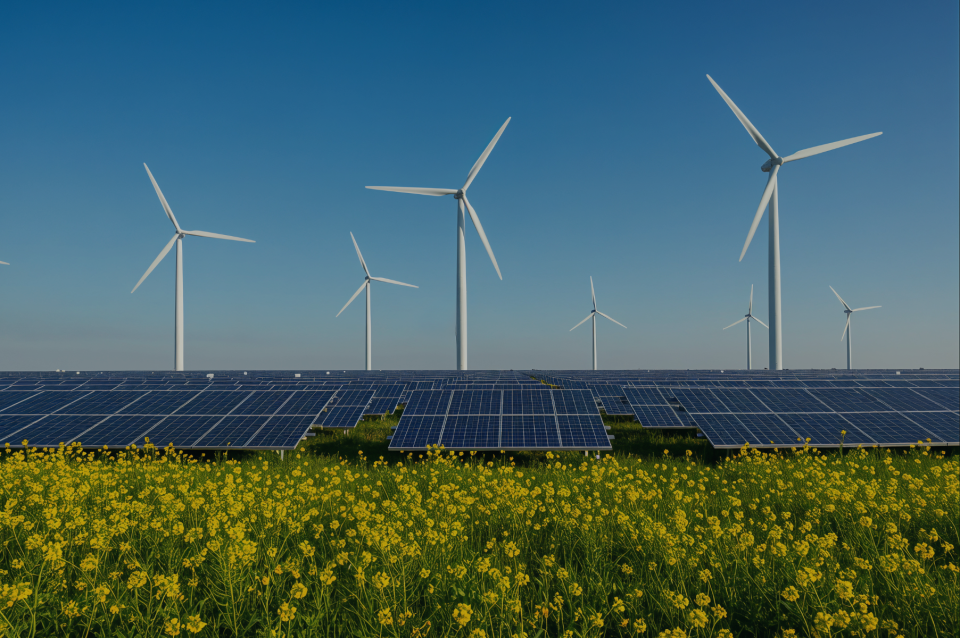
The Ministry of Mining and Energy has initiated the process of amending the Law on the Use of Renewable Energy Sources. Among the key reasons for these amendments, the Ministry cites the need to ensure full transposition of Directive (EU) 2018/2001 on the promotion of the use of energy from renewable sources (RED II), as well as the transposition of selected provisions of Directive (EU) 2023/2413 (RED III) concerning the acceleration of renewable energy deployment, permitting procedures, citizen energy, public participation, and spatial and strategic planning.
The preparation of these amendments represents an important opportunity to ensure that the further development of renewable energy is supported by robust safeguards for biodiversity, meaningful public participation, and the involvement of citizens and local communities. We believe that the proposed legislative changes require a comprehensive Regulatory Impact Assessment and should be developed through a transparent and inclusive process that ensures full and effective public participation, avoiding minimum consultation periods and public consultations held during the summer holiday season.
One of the most significant innovations introduced by RED III is the concept of Renewable Acceleration Areas (RAAs). These are areas specifically designated for the deployment of renewable energy projects, where permitting procedures for solar and wind energy installations should be faster, simpler, and less administratively burdensome.
Aligning Serbia’s legal framework with RED III presents an opportunity to strengthen spatial planning, environmental protection, and energy governance. Accelerating the deployment of renewable energy and maintaining a high level of environmental protection are complementary objectives that can contribute to the decarbonisation of the economy and help address the harmful impacts of fossil fuel combustion on public health, the environment, and economic development. Through the gradual implementation of RED III, Serbia can create greater legal certainty, reduce conflicts, increase public trust, and achieve its climate and energy objectives more effectively.
The designation of Renewable Acceleration Areas should be based on comprehensive spatial mapping and carefully conducted assessments. Experience from EU Member States implementing RED III demonstrates that this process requires time and preparation. However, there are already measures that can be taken to facilitate the accelerated deployment of renewable energy projects through the transposition and implementation of RED II and RED III provisions.
Why does the sequence of steps matter?
Within the European Union, Renewable Acceleration Areas are built upon an environmental protection framework that has been developed over more than three decades through the Environmental Impact Assessment Directive, the Habitats Directive, the Birds Directive, and the Water Framework Directive. Member States first conduct detailed assessments to determine where renewable energy deployment can take place with the lowest risks to nature and biodiversity. Only after such assessments are completed are Renewable Acceleration Areas designated, allowing permits to be issued through accelerated procedures.
In other words, acceleration is introduced only after there is sufficient certainty that a location is suitable for renewable energy development.
Serbia has not yet established such a framework. The boundaries of the ecological network have not been formally adopted, procedures for Appropriate Assessment are still being developed, and many spatial plans were prepared before the adoption of the European Green Deal and the EU’s updated climate and energy targets. Under these circumstances, the designation of Renewable Acceleration Areas may entail significant risks.
Why are envitnmrntal assessments essential?
RED III allows certain renewable energy projects located within Renewable Acceleration Areas to be exempted from project-level Environmental Impact Assessment (EIA) requirements.
However, this possibility exists only because it is assumed that a Strategic Environmental Assessment (SEA) has already been carried out for the entire area and that the Member State has an effective nature protection framework capable of ensuring that significant adverse environmental impacts are identified and addressed.
Where such a framework does not exist, exempting projects from Environmental Impact Assessment does not represent an acceleration of procedures; rather, it removes one of the key safeguards designed to prevent environmental harm and protect local communities.
What should be done before designating Renewable Acceleration Areas?
For Renewable Acceleration Areas to fulfil their intended purpose, their designation must be based on clear and transparent criteria, a gradual and responsible reform of the spatial planning system, improvements to environmental protection mechanisms, and the full transposition and implementation of the Habitats Directive, the Birds Directive, and the Water Framework Directive within the Energy Community framework.
In the meantime, a participatory process involving all relevant stakeholders should be used to advance the transposition and implementation of RED II and RED III through the following measures:
- Establish and implement simplified permitting procedures for renewable energy projects while fully respecting the energy efficiency first principle.
- Apply the principle of prioritising already developed and artificial surfaces for renewable energy deployment by identifying priority locations on already developed land, rooftops and building facades, transport infrastructure, industrial sites, and other locations where there are no significant environmental conflicts or risks to the public interest. This approach would enable renewable energy deployment to continue without delay while allowing institutions to strengthen administrative procedures and capacities through practical experience.
- Remove administrative barriers and establish simplified permitting and grid connection procedures for solar energy projects that do not pose risks to the stability and security of the electricity distribution system. Clear guidance, notification procedures, and the principle of positive administrative silence should be applied to projects developed by renewable self-consumers (prosumers) and citizen energy communities for installations up to 100 kW, or for projects whose installed capacity does not exceed the approved connection capacity. Renewable energy projects developed by households, citizen energy communities, and small and medium-sized enterprises should be recognised as key drivers of the clean energy transition and prioritised within renewable energy policy.
Faster permits, yes – but not at the expense of nature protection
The deployment of renewable energy projects is essential for Serbia’s energy transition. More efficient administrative procedures can significantly contribute to faster project development and the achievement of decarbonisation objectives.
For this reason, the introduction of Renewable Acceleration Areas should be based on the consistent implementation of environmental legislation and responsible spatial and urban planning practices whose effectiveness has already been demonstrated across the European Union. Priority should be given to the transposition and implementation of those RED II and RED III provisions that facilitate renewable energy deployment on already developed sites and establish simple, transparent, and predictable procedures for citizen energy projects and small and medium-sized enterprises.
This article is the first in a series of three blog posts jointly published by the Belgrade Open School, the Environment Improvement Centre, and Platform for Social Development and Innovation (CORE) in the context of the ongoing amendments to the Law on the Use of Renewable Energy Sources.
We believe that the early stages of legislative drafting provide a critical opportunity to open a meaningful dialogue and involve experts, stakeholders, and the broader public in discussions about the future development of renewable energy in Serbia. Through this series, we aim to contribute to a more informed public debate and provide recommendations that support the implementation of the energy transition in the public interest while ensuring a high level of environmental protection.
Photo: Freepick