
 381 60 30 65 800



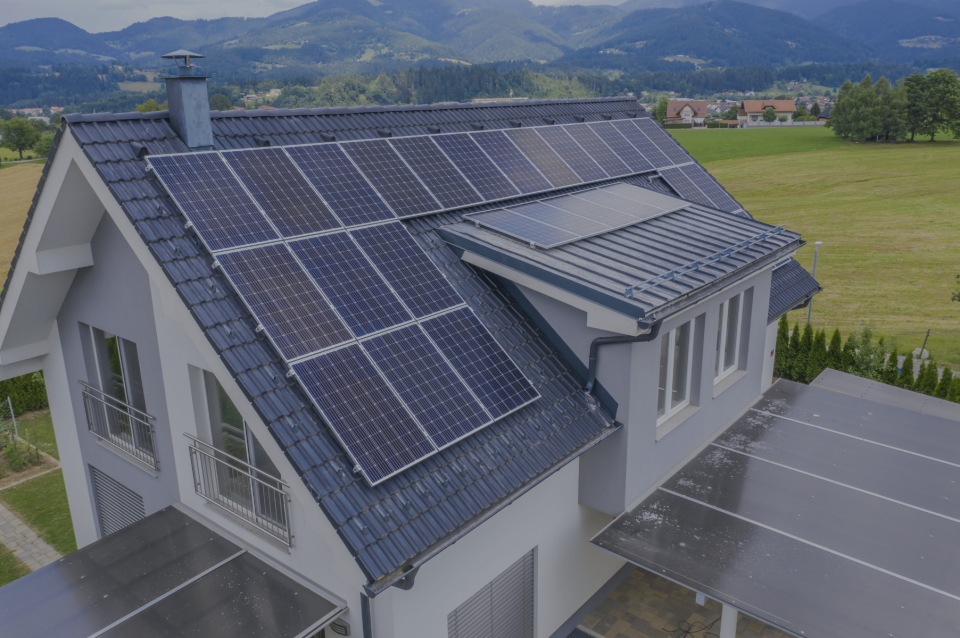
To take an important step towards increasing the use of renewable energy, we need to look up—to the rooftops of our homes, schools, hospitals, and factories. If Serbia is serious about expanding renewable energy, it must remove the administrative barriers that currently prevent citizens, businesses, and public institutions from generating their own electricity. The rules introduced by the European Union through the Renewable Energy Directive do not call for lower safety standards—they call for less bureaucracy for small-scale solar installations whose construction poses no threat to the public interest.
Serbia's Ministry of Mining and Energy seems to run on solar power itself—as soon as the summer holidays begin, public consultations on important laws and strategies suddenly get underway. Whether the Ministry assumes that citizens have more time to engage in public affairs during the summer, or that they will instead be preoccupied with their vacations rather than public policy, is difficult to say. Either way, the recently concluded public consultation on the proposed amendments to the Law on the Use of Renewable Energy Sources should not go unnoticed.
The reason is straightforward. Renewable energy sources are not an end in themselves. Their purpose is not simply to increase the share of "green energy" in official statistics, but to reduce greenhouse gas emissions, mitigate the impacts of climate change, and strengthen the security of electricity supply. For a country like Serbia—located in one of Europe's regions most vulnerable to climate change and having suffered billions of euros in damage from droughts, floods, and extreme weather events over the past three decades—the development of renewable energy must be a strategic priority.
At the same time, it is important to dispel one of the myths that has become increasingly common in public debate. The damage that fossil fuels have inflicted on public health, the environment, and the economy over decades cannot be equated with the impacts of renewable energy projects. This, of course, does not mean that every wind farm or solar power project should be supported without question. Poor planning, disregard for legal requirements, and the exclusion of local communities from decision-making have justifiably undermined public trust in some projects. However, this is not an argument against renewable energy—it is an argument against poor governance in its development.
This is precisely why the amendments to the Law on the Use of Renewable Energy Sources should amount to much more than a mere exercise in harmonising Serbian legislation with European directives. They represent an opportunity for Serbia to remove the administrative barriers that currently slow down projects posing the lowest risk to the public interest while offering the greatest potential to accelerate the country's energy transition—namely, rooftop solar installations.
This intention is reflected in the Background Paper accompanying the draft law, in which the Ministry announces the full transposition of the 2018 Renewable Energy Directive (RED II), as well as alignment with the relevant provisions of the revised Renewable Energy Directive adopted in 2023 (RED III). Yet this ambitious objective cannot be achieved simply by copying European legal provisions. Their underlying rationale must first be understood.
And that rationale is quite straightforward.
Today, the European Union starts from the premise that small-scale solar installations mounted on existing buildings—whether on homes, schools, hospitals, factories, or commercial buildings—should not be burdened with administrative procedures that were originally designed for large infrastructure projects. For this reason, RED III requires Member States to ensure that permitting procedures for solar installations of up to 100 kW are simple, predictable, and swift. The objective is not to weaken the protection of the public interest or lower technical standards, but to eliminate unnecessary bureaucracy.
Unfortunately, Serbia has been moving in the opposite direction in recent months.
Recent amendments to secondary legislation governing planning and construction have introduced a requirement to obtain a construction permit for rooftop solar installations with a capacity exceeding 10.8 kW and up to 150 kW. In some local self-government units, investors must also obtain location conditions. Instead of simplifying procedures, citizens, small businesses, and public institutions wishing to install rooftop solar systems have been burdened with an additional administrative step that prolongs procedures and increases costs.
This is not merely a question of bureaucracy.
Imagine the principal of a school who wants to install a rooftop solar system to reduce electricity bills, or the owner of a small factory who wants to generate part of the company's electricity on-site. Is it really necessary for them to go through additional administrative procedures that contribute neither to the safety of the building, nor to the stability of the distribution network, nor to the protection of any other public interest?
Experience to date suggests that the answer is, in most cases, no.
Where rooftop solar installations are concerned, provided that their installed capacity does not exceed the approved connection capacity of the building, the key public interests are already protected through the technical conditions issued by the electricity distribution system operator and through fire safety regulations. These procedures verify whether the grid can safely accommodate the new generation facility and whether all technical requirements for grid connection have been fulfilled.
If that is the case, it is difficult to justify additional administrative procedures that do not enhance safety but merely prolong the process.
For this reason, the ongoing amendments to the Law on the Use of Renewable Energy Sources should be used to eliminate procedures that have proven unnecessary in practice. For prosumer rooftop solar installations of up to 150 kW, lawmakers should consider abolishing the requirement to obtain location conditions and other administrative procedures that serve no clearly defined public-interest purpose, while maintaining all technical requirements imposed by the distribution system operator and the competent fire protection authorities. However, this would require a horizontal intervention across Serbia's regulatory framework and amendments to all regulations that currently create unnecessary barriers—not only the Law on the Use of Renewable Energy Sources itself.
This does not mean that the electricity distribution network should be left without proper oversight, nor that small-scale solar installations should be connected without any form of control. On the contrary, the role of the distribution system operator remains essential. It should continue to assess network capacity, determine the technical conditions for connection, and ensure the stability and reliability of the electricity distribution system. However, protecting the grid should not serve as a justification for maintaining administrative procedures that do not contribute to that objective. At the same time, the distribution system operator should no longer be allowed to respond to connection requests with silence. Instead, it should be legally required to complete all administrative and technical procedures within reasonable deadlines to ensure the timely connection of installations that do not jeopardise the secure operation of the distribution network.
Modern European legislation places the emphasis on technical solutions, grid digitalisation, improved connection procedures, and clear and predictable decision-making deadlines. Such an approach does not compromise the security of the electricity system. On the contrary, it makes the system more efficient and better prepared for the expansion of decentralised electricity generation.
This is why the forthcoming amendments to the Law on the Use of Renewable Energy Sources should be used to achieve what the EU directives actually seek to accomplish: removing unnecessary administrative barriers to the development of citizen energy and decentralised solar systems. If Serbia misses this opportunity, it will be difficult to claim that it is genuinely committed to accelerating the energy transition. A successful energy transition will not be possible unless citizens, schools, hospitals, and small businesses are enabled to generate clean electricity on their own rooftops simply, without unnecessary bureaucracy, and in full compliance with the technical rules that safeguard the electricity system.
This blog is the second in a series jointly published by the Belgrade Open School, the Environment Improvement Centre (CUZS) and the Platform for Social Development and Innovation (CORE) on the proposed amendments to the Law on the Use of Renewable Energy Sources.
The first blog in the series is available here.
Mirko Popović, Platform for Social Development and Innovation
Photo Source: Magnific