
 381 60 30 65 800



At the end of last year, the European Commission proposed that the Ministerial Council of the Energy Community incorporate the provisions of the Birds Directive, the Habitats Directive, and the Water Framework Directive into the legal framework of the Energy Community Treaty.
The proposal comes at a time when the Energy Community Contracting Parties are preparing to implement the revised Renewable Energy Directive (RED III). RED III introduces the concept of Renewables Acceleration Areas (RAAs), which are intended to enable the faster and more efficient deployment of renewable energy projects and contribute to achieving the European Union’s climate and energy objectives.
The Energy Community Treaty already contains certain environmental protection mechanisms, including the obligation to carry out Strategic Environmental Assessments for energy-related plans and programmes, as well as Environmental Impact Assessments for individual projects. The European Commission’s proposal seeks to ensure that the permitting process for new energy projects is aligned with the objectives of the Habitats Directive, the Birds Directive, and the Water Framework Directive.
A joint position paper endorsed by 78 civil society organisations from across the Western Balkans highlights the importance of incorporating the relevant provisions of these directives into the legal framework of the Energy Community Treaty.
The successful implementation of RED III requires the prior establishment of a clear and functional nature protection system, including the identification of areas of importance for the conservation of biodiversity and water resources. Only after these areas have been defined can Renewables Acceleration Areas be planned in a responsible and transparent manner.
If the proposal is not adopted during 2026, the Western Balkan economies risk directing renewable energy development towards solutions that are legally uncertain, socially contested, and environmentally harmful. Without clear rules for nature protection, the successful deployment of renewable energy cannot be ensured. On the contrary, neglecting nature protection may lead to new conflicts, a loss of public trust, and further delays in the decarbonisation process.
The full document is available HERE.
This initiative was launched as part of the Green Agenda Navigator project, co-funded by the European Union. The project is implemented by the Belgrade Open School in cooperation with regional partners: the Aarhus Centre in Bosnia and Herzegovina, Eco-Team from Montenegro, Eco-Z from Kosovo*, the Centre for Environmental Research and Information Eko-svest from North Macedonia, the Protection and Preservation of Natural Environment in Albania (PPNEA), and the CEE Bankwatch Network.
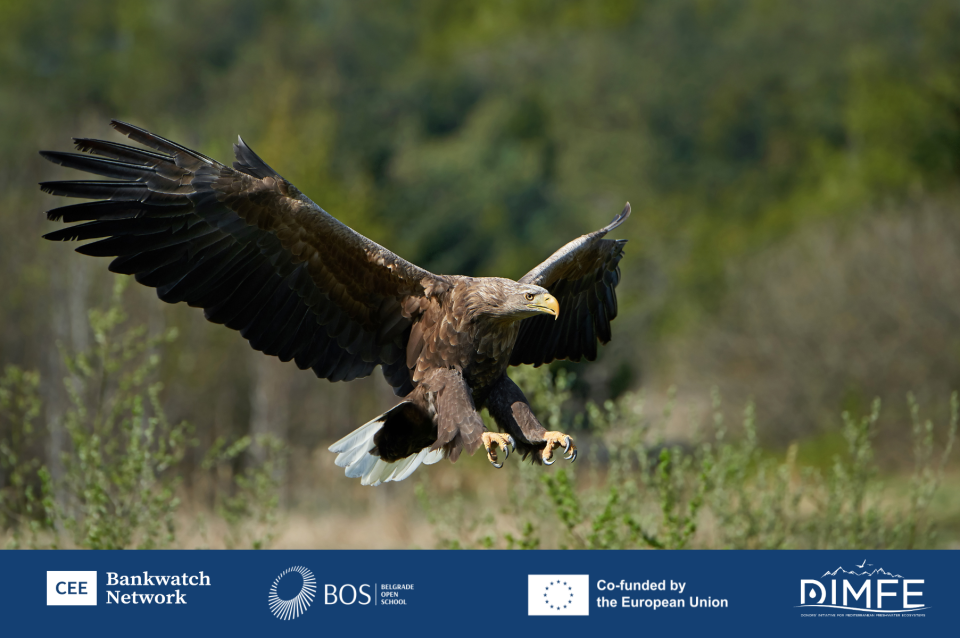
Photo: Dennisjacobsen, Adobe Stock
* This designation is without prejudice to the status of Kosovo and is in accordance with United Nations Security Council Resolution 1244, as well as the Advisory Opinion of the International Court of Justice on the Kosovo Declaration of Independence.