
 381 60 30 65 800



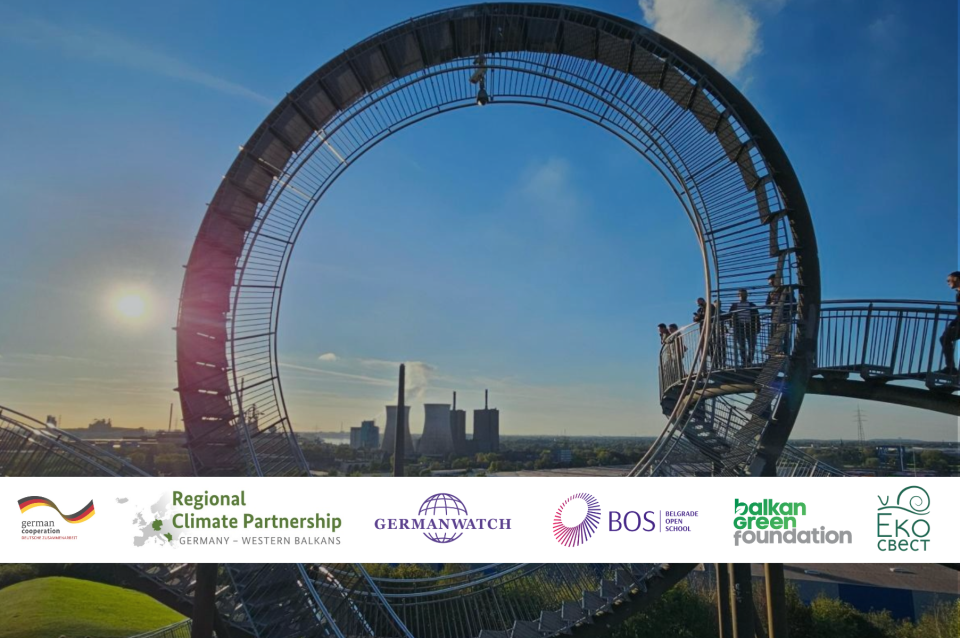
A Tiger and a Turtle on the Rhine: Lessons from the Ruhr Region’s Transformation
The Ruhr region, located in the German federal state of North Rhine-Westphalia, was one of Europe's most important industrial centres for decades. In the mid-20th century, the coal and steel industries employed more than 700,000 people, accounted for over 10% of Germany's GDP, and shaped the region's economic development, urban landscape, labour market and everyday life. Industry was not only a source of income and employment but also the foundation of the region's identity.
Since the 1980s, as traditional industries began to decline economically, the region has been developing new economic and social opportunities. Former mines and industrial complexes have been transformed into cultural and educational centres, hubs for business innovation, tourist attractions and recreational spaces, while new pathways for industrial and energy development continue to be explored.
However, the transformation is far from complete. It involves much more than technological change or the closure of production facilities. Transformation means reshaping the identity, culture and way of life of more than five million people who call this region home.
Transformation Is About More Than Moving Away from Coal
Unlike transition, which refers to moving from one state to another, transformation involves a deeper change in the entire development model, as well as in behaviours, perceptions and the acceptance of a new reality. It raises questions about the future of local economies, new employment opportunities, the role of institutions and the ability of local communities to participate in decisions concerning their development and emerging identity.
New energy capacities alone do not guarantee economic security, new jobs or balanced regional development. The decline of one industry does not automatically mean that another, equally large industry will emerge to absorb the displaced workforce. Achieving this requires economic diversification, investment in knowledge and skills, regeneration of industrial sites and the integration of different development policies.
An important milestone in reshaping the Ruhr region's development vision was the International Building Exhibition Emscher Park (IBA Emscher Park), implemented between 1989 and 1999. Through a series of interconnected projects focusing on urban regeneration, revitalisation and the preservation of industrial heritage, this initiative helped direct the attention of policymakers, financial institutions and investors towards the development potential of a region previously associated primarily with mining and heavy industry. Abandoned industrial sites began to be recognised as valuable resources for building a new future.
Industrial Heritage as a Resource for New Development
Across the region, numerous industrial facilities have been given entirely new purposes. During our study visit, we explored Landschaftspark Duisburg-Nord, a former industrial complex that has been transformed into a public park, a landmark of the region's industrial heritage and a space for recreation, cultural and sporting events, and tourism. Preserved blast furnaces and industrial halls have found new uses, while the former production infrastructure has become a distinctive part of the site's identity.
Another example is the Zeche Zollverein complex in Essen, a former coal mine transformed into a cultural and development hub and inscribed on the UNESCO World Heritage List. The complex also hosts university courses. Where workers processed coal fifty years ago, students now attend lectures on the applications of artificial intelligence.
The Ruhr region attracts millions of visitors every year, and industrial complexes once dedicated to production have become part of its new development landscape. This transformation does not mean erasing the industrial past, but rather integrating it into a new narrative about the region's future. Preserving buildings, knowledge and memories of industrial development also means safeguarding part of the identity of communities whose lives depended on mines and factories for generations.
Tourism and culture, however, cannot replace all the jobs and economic functions once provided by heavy industry. This is why transformation remains an ongoing process, requiring a more diversified economy, support for entrepreneurship, innovation, new employment opportunities and investment in workforce skills.
What Can Serbia and the Western Balkans Learn from the Ruhr Region?
Serbia, like the other Western Balkan countries, is already undergoing an energy transition. However, almost all of us still face the challenge of transforming regions that have been the backbone of industry, energy production and economic development for more than 80 years. These regions are already confronting the economic, educational, social, cultural and demographic challenges associated with the energy transition.
This is why we organised a study visit for a delegation from Serbia, bringing together representatives of local governments, trade unions and energy cooperatives to explore what a fundamental transformation of industrial regions looks like in practice.
The Ruhr region is not a model that can simply be replicated in Serbia or elsewhere in the Western Balkans. Nevertheless, its experience offers several important lessons.
First, the future of mining and industrial regions must be planned well in advance. Developing new economic activities, preparing workers for new opportunities and regenerating industrial sites require a long-term vision spanning several decades, supported by stable financing. This is equally relevant for communities in Serbia that remain closely dependent on coal mining and coal-based electricity generation, such as Kostolac and Lazarevac.
Second, transforming an industrial region requires cooperation across different levels of government and sectors. Local governments cannot bear the burden of transformation alone. Coordination between national and local policies, a clear division of responsibilities and the involvement of public institutions, businesses, educational institutions, trade unions and civil society organisations are essential.
Third, transformation requires a broader understanding of development. Energy objectives must be linked to employment, education, environmental protection, the preservation of industrial heritage, the development of new economic activities and the creation of a new identity for communities that were, until recently, major industrial centres.
Fourth, change does not happen overnight. One of Duisburg's most recognisable landmarks, the Tiger & Turtle sculpture, brings together a tiger and a turtle in an unusual rollercoaster-like structure. Its symbolism offers an excellent metaphor for transformation. The tiger represents speed and energy, while the turtle reminds us of the patience and time required for meaningful change.
The site itself also tells a story of transformation. The sculpture stands on a former industrial slag heap created by a zinc smelting plant, which was subsequently reclaimed and transformed into a park. A site once used for industrial waste disposal is now a public space that attracts visitors and offers panoramic views of a region shaped by heavy industry. This image perhaps best captures the transformation of the Ruhr region. The energy and climate crises demand swift decisions, but economic transformation, the creation of new jobs, the development of the knowledge and skills needed for those jobs, and building confidence in the future cannot happen at the push of a button. These processes require time, planning and the meaningful participation of the people who live in these communities. The challenge is knowing when to be a tiger and when to be a turtle.
The study visit was organised within the project "Energy Transformation and Decarbonisation in the Western Balkans". The project is led by Germanwatch from Germany, with Belgrade Open School, EkoSvest from Skopje and the Balkan Green Foundation from Pristina as consortium partners. The visit brought together 11 representatives of civil society organisations, local authorities, trade unions and experts in energy transition from Serbia.